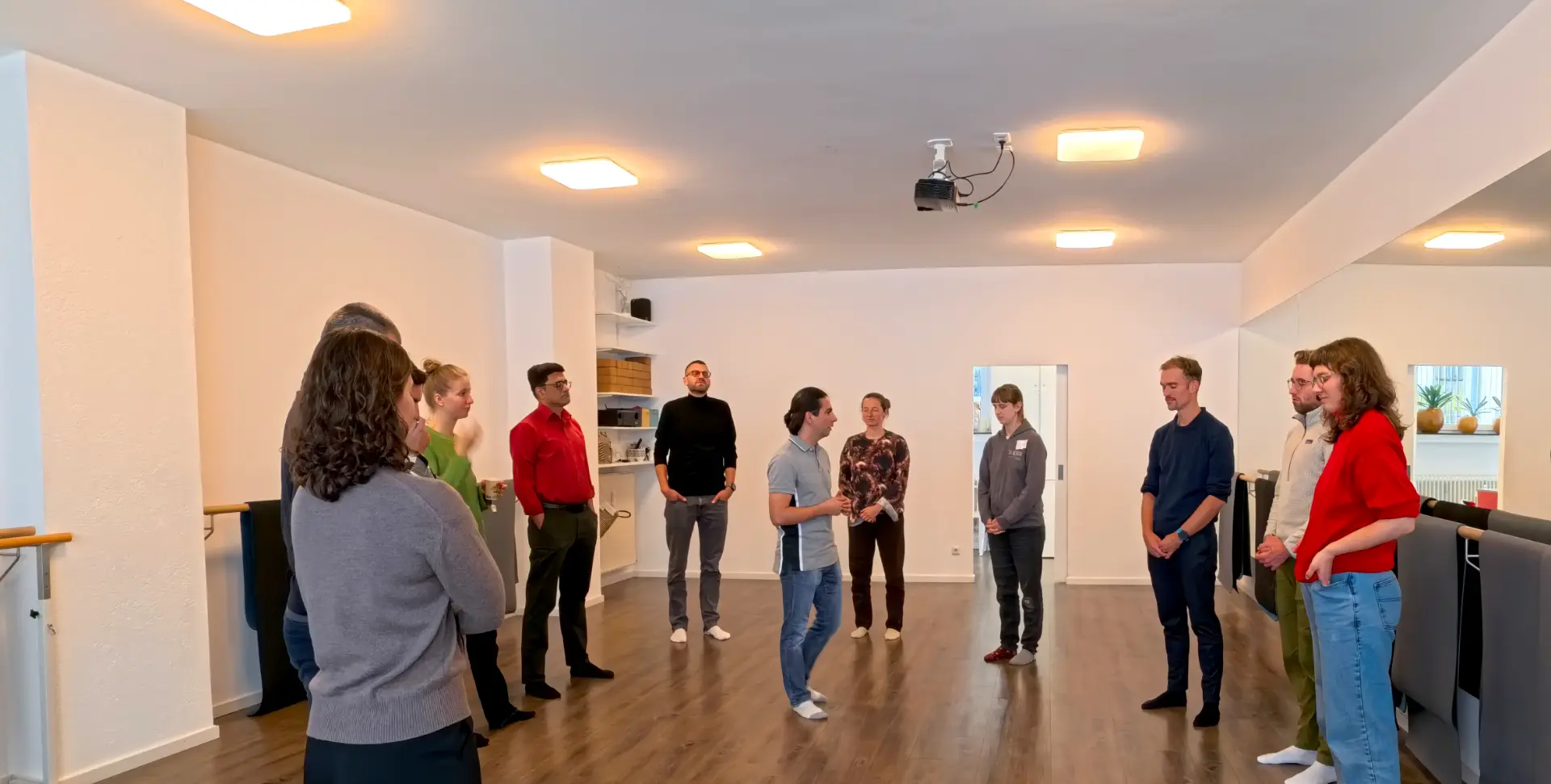
Participants during a Silent Tower workshop

    Leadership Presence Under Pressure

    The Outcomes of the
    Silent Tower Method™

    Recognize earlier. Respond differently.
    Change what happens next.

    One of the most fundamental outcomes of the Silent Tower Method™ is the ability to recognize habitual reactions before they determine our behavior.

    A founder might realize days or weeks after a difficult conversation that they became defensive, avoided an important issue, or reacted out of fear. With practice, that recognition can happen moments afterward, during the interaction itself, and eventually before the habitual response fully takes over.

    This shift changes what's possible. What once happened automatically becomes something we can recognize, examine, and respond to deliberately, while there's still an opportunity to influence what happens next.

    The first sign of progress is not necessarily that the reaction disappears. It's that we notice it sooner and have more opportunity to choose our response.

    And when that response changes, the effects can reach far beyond the individual.

    How One Change Can Move an Entire Company

    What changes within a founder can change what becomes possible for the team.

    Consider a founder who believes in their product but avoids sales calls for fear of rejection. As they learn to recognize and manage that discomfort, they begin having the conversations they previously postponed.

    Those conversations can lead to early adopters and valuable customer feedback. As the team sees people actually using what they've built, their work gains tangible meaning, priorities become clearer, and enthusiasm grows.

    What began as a change in one founder's response to rejection can become a source of momentum for the entire organization.

    This illustrates the relationship between three interconnected levels:

    1. 01

      Internal Capacity

      How leaders respond within themselves

      The founder develops greater tolerance for rejection and uncertainty.

      Earlier recognition of habitual reactions, greater emotional regulation, cognitive flexibility, tolerance for uncertainty, and the ability to remain engaged under pressure.

    2. 02

      Observable Leadership Behavior

      How leaders act and interact with others

      They initiate sales conversations, engage with customers, and act despite the discomfort.

      Clearer communication, more deliberate decisions and negotiations, stronger boundaries, constructive disagreement, effective delegation, and greater openness to feedback.

    3. 03

      Organizational Effectiveness

      How leadership behavior influences the company

      Early customer traction and feedback can give the team clearer direction, greater motivation, and a stronger sense of shared purpose.

      Trust, ownership, accountability, collaboration, coordination, and execution.

    The same principle applies in other leadership situations:

    • A CEO who becomes less defensive creates more room for honest disagreement.

    • A founder who delegates without repeatedly reclaiming control gives others greater ownership.

    • Cofounders who address difficult issues earlier can prevent unresolved tensions from undermining their working relationship.

    Where Change Becomes Visible

    Different challenges. Shared underlying capabilities.

    The Silent Tower Method™ develops capabilities that can influence how founders and leadership teams navigate consequential decisions, conversations, and relationships.

    The following examples illustrate the behavioral changes these capabilities are intended to support.

    A founder presenting to investors is challenged on their assumptions. Anxiety rises. They feel an impulse to justify themselves, interrupt, or rush to provide an answer that hasn't been fully considered.

    With greater awareness, they can recognize that reaction, remain engaged with the question, and respond thoughtfully and confidently rather than defensively.

    What improvement looks like

    Taking time to process difficult questions, giving more thoughtful answers, communicating clearly, remaining open to criticism, and acknowledging uncertainty without losing confidence.

    Observations From the Field

    Change can begin with something as visible as posture, tone, or a different response to the same situation.

    Silent Tower's experiential workshops create opportunities to observe habitual reactions during structured interpersonal exercises.

    We've observed changes in participants' posture, tone, communication, and perceived confidence as they experience challenging interactions.

    A participant practicing a firm boundary may initially apologize repeatedly, smile involuntarily, soften their position, or withdraw when another person expresses disappointment or frustration.

    Through guided observation, reflection, and repeated practice, participants can experiment with maintaining that boundary while remaining respectful and engaged.

    They may discover that they can tolerate someone's disappointment without abandoning their decision, communicate firmly without becoming confrontational, or remain open to disagreement without becoming defensive.

    An important part of the experience is exploring the difference between how participants feel internally and how they are perceived externally.

    Someone may feel uncertain while appearing confident.

    Another may believe they're communicating assertively while the other participant experiences their response as aggressive.

    Receiving feedback from the other person creates an opportunity to understand that difference and experiment with a new response.

    These observations give us direct insight into what happens during an exercise. They are meaningful signs of awareness and behavioral practice, while sustained changes in everyday leadership require evidence beyond the workshop itself.

    How Do We Know Something Has Changed?

    From recognizing reactions earlier to behaving differently when it matters.

    The first indication of progress is often simple: someone notices a familiar reaction sooner and has an opportunity to respond differently.

    But recognition is only part of the story. The more meaningful question is whether that growing awareness translates into different behavior when similar situations arise.

    WE DISTINGUISH FOUR FORMS OF CHANGE

    01

    Observed During the Workshop

    What changes as a participant repeats an exercise?

    We examine observable differences in posture, tone, communication, boundary-setting, willingness to remain engaged, and responses to interpersonal pressure.

    We also look at whether participants recognize their reactions earlier and demonstrate alternative responses when similar pressure is introduced.

    These observations provide direct evidence of behavior during an exercise, but do not establish lasting change on their own.

    02

    Reported by Participants

    What does the participant notice or experience differently?

    Participants may report recognizing reactions they previously overlooked, feeling more comfortable with disagreement, or discovering different ways to communicate under pressure.

    Their feedback helps establish what they experienced, what they learned about their own responses, and whether they perceive a change in their ability to handle challenging interactions.

    These accounts provide valuable insight into the participant's experience, while remaining distinct from independently observed behavioral change.

    03

    Applied in Real Leadership Situations

    What does the participant actually do differently afterward?

    This is where the distinction between recognizing a pattern and changing behavior becomes particularly important.

    Examples include initiating a previously avoided sales call, maintaining a negotiation boundary, having a difficult conversation with a cofounder, remaining engaged when challenged by an investor, or delegating a decision without immediately taking back control.

    Specific follow-up accounts and documented examples provide a stronger indication that workshop learning is carrying into everyday leadership than a general feeling of improvement.

    04

    Reflected in the Organization

    Do other people experience a difference in how the leader operates?

    Changes in leadership behavior can become visible in the experiences and actions of the people around the leader.

    A cofounder may notice that difficult conversations happen earlier. Team members may experience greater freedom to make decisions or challenge ideas. Employees may report clearer expectations, greater trust, or less unnecessary escalation.

    The organizational question is whether changed leadership behavior is being experienced by others and contributing to meaningful differences in how the company operates.

    From Intended Outcomes to Demonstrated Change

    The measure of progress is not simply what someone understands during a workshop, but what they become able to recognize and do differently when similar pressures arise in real life.

    Experience the
    Silent Tower Method™

    The pressures of leadership will continue to evolve as companies grow. What can develop is the ability to recognize those pressures, remain engaged with them, and choose how to respond.

    Explore how Silent Tower can help your founders or leadership team develop leadership presence under pressure.